Forts and Palaces
|
Lahore Fort
|
|
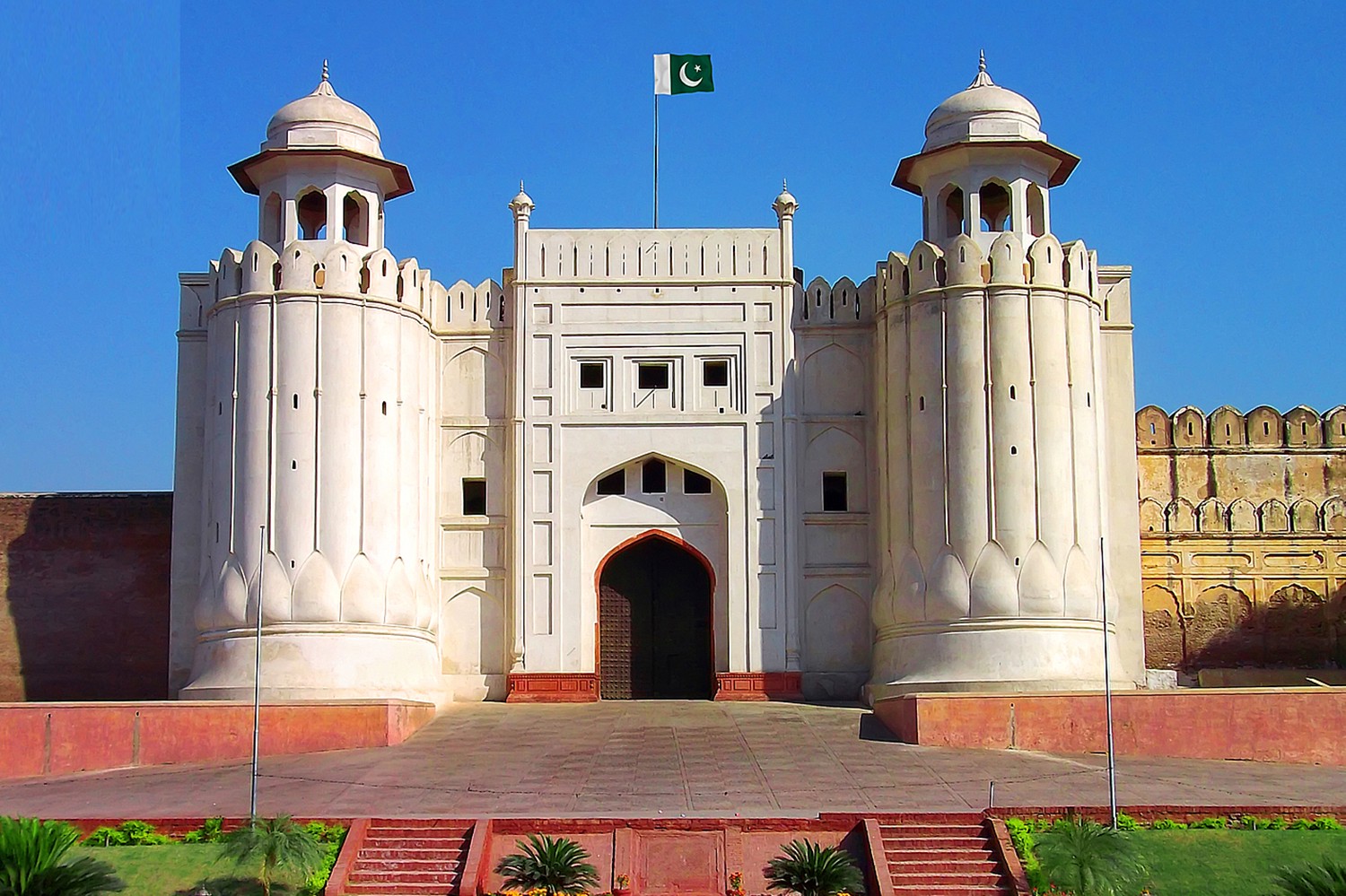 A masterpiece from the time of the brilliant Mughal civilization, the majestic Lahore Fort, in the Walled City of Lahore, is characterized by its monumental structures. It is the only place in the country which represents the different phases in the development of Mughal architecture. It achieved prominence during the reign of Emperor Akbar. Afterwards his successors, Jahangir, Shah Jahan and Aurangzeb added numerous new buildings. A masterpiece from the time of the brilliant Mughal civilization, the majestic Lahore Fort, in the Walled City of Lahore, is characterized by its monumental structures. It is the only place in the country which represents the different phases in the development of Mughal architecture. It achieved prominence during the reign of Emperor Akbar. Afterwards his successors, Jahangir, Shah Jahan and Aurangzeb added numerous new buildings.
The Fort is situated in the north west corner of the city. It is irregular in plan being about 500 yards east to west by some 400 yards north to south. It is girdled round by a fortification wall constructed in small brunt brick having considerable strength. At intervals the wall has bastions and holes for musketry.The important buildings of the fort are Dault Khana-e-Khas-o-Am, Sleepimng Chamber of Emperor Jahangir, Shish Mahal, Diwan-e-Am, Diwan-e-Khas, Moti Masjid, Alamgiri Gate, etc.
|
Rohtas Fort
|
|
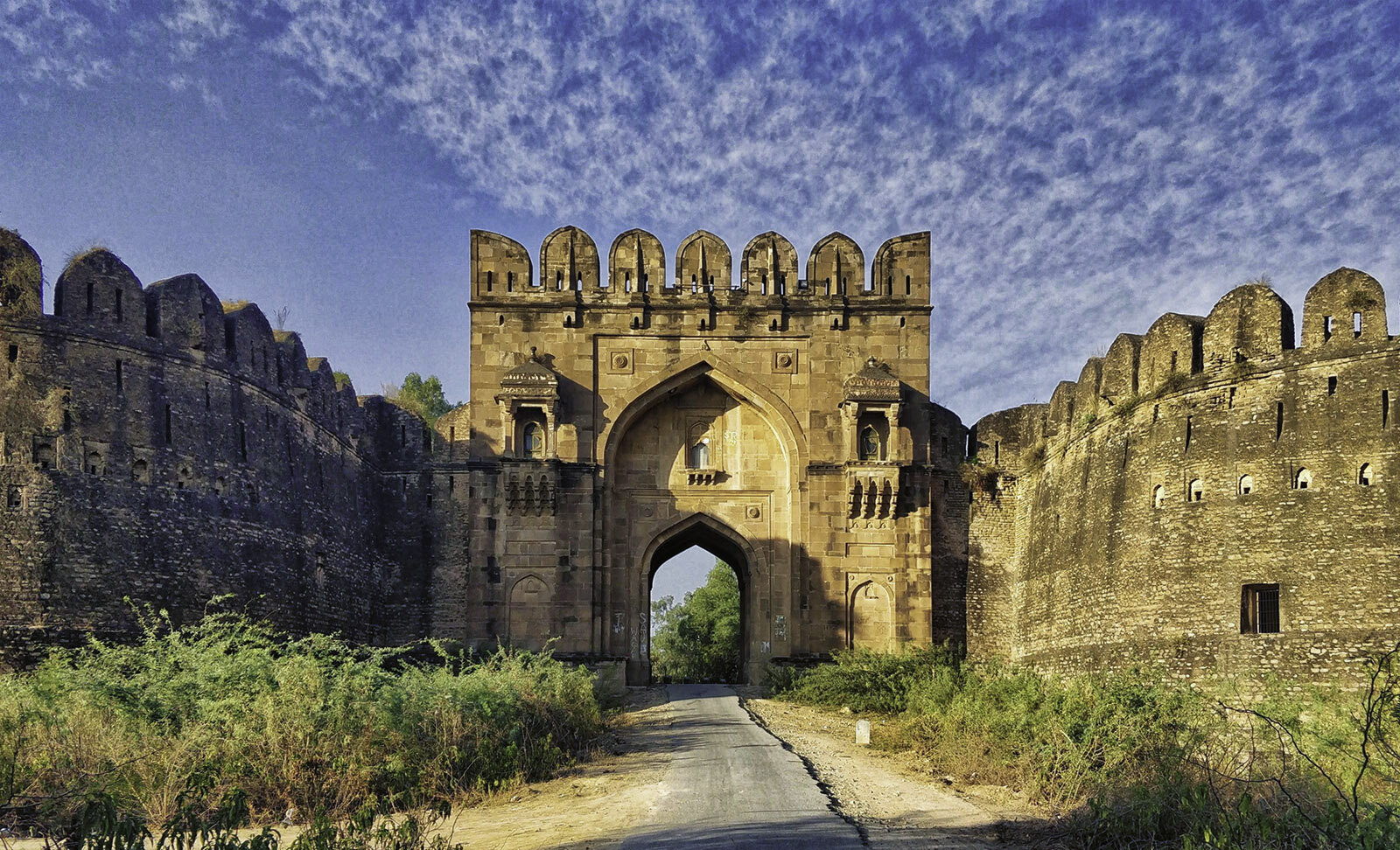 Built by Raja Todar Mal on the orders of Sher Shah Suri in 1542 A.D. to suppress the local allies of Mughals and to block the advances of emperor Humayun who had been exiled to Persia after his defeat at the Battle of Kannauj, it was inscribed by UNESCO as a World Heritage Site in 1997. Built by Raja Todar Mal on the orders of Sher Shah Suri in 1542 A.D. to suppress the local allies of Mughals and to block the advances of emperor Humayun who had been exiled to Persia after his defeat at the Battle of Kannauj, it was inscribed by UNESCO as a World Heritage Site in 1997.
At about 11 miles North-West of Jhelum and 4 miles south of Dina Railway Station, the king of forts is an exceptional example of early Muslim military architecture in Central and South Asia.
|
Derawar Fort
|
|
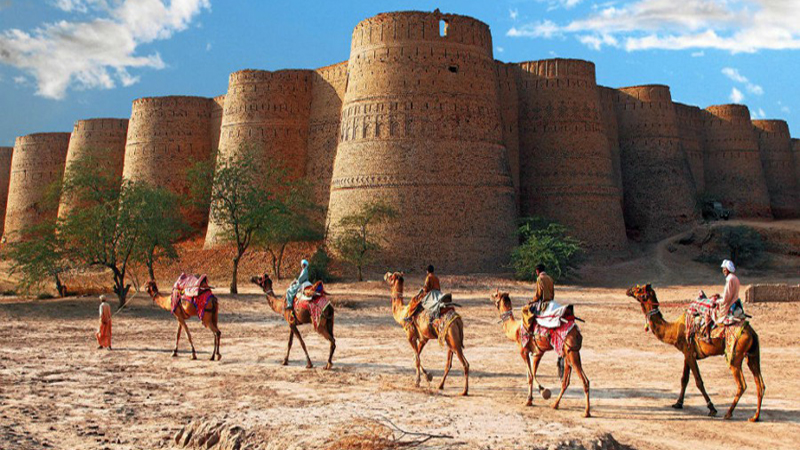 Derawar Fort is the best surviving example which was built in the 9th Century by Rai Jajja Bhatti. The fort was taken over by the Nawab of Bahawalpur, Sadeq Mohammad Khan I, in 1733. The most remarkable feature of Derawar’s structure is its high bastions rising into the sky from sands of Cholistan, like forty formidable knights guarding the great fort. Derawar Fort is the best surviving example which was built in the 9th Century by Rai Jajja Bhatti. The fort was taken over by the Nawab of Bahawalpur, Sadeq Mohammad Khan I, in 1733. The most remarkable feature of Derawar’s structure is its high bastions rising into the sky from sands of Cholistan, like forty formidable knights guarding the great fort.
The fort is a massive and visually stunning square structure built of clay bricks. In Cholistan Desert of Bahawalpur, Derawar Fort is living there to tell the tale and stands tall in the sand.
|
Noor Mahal
|
|
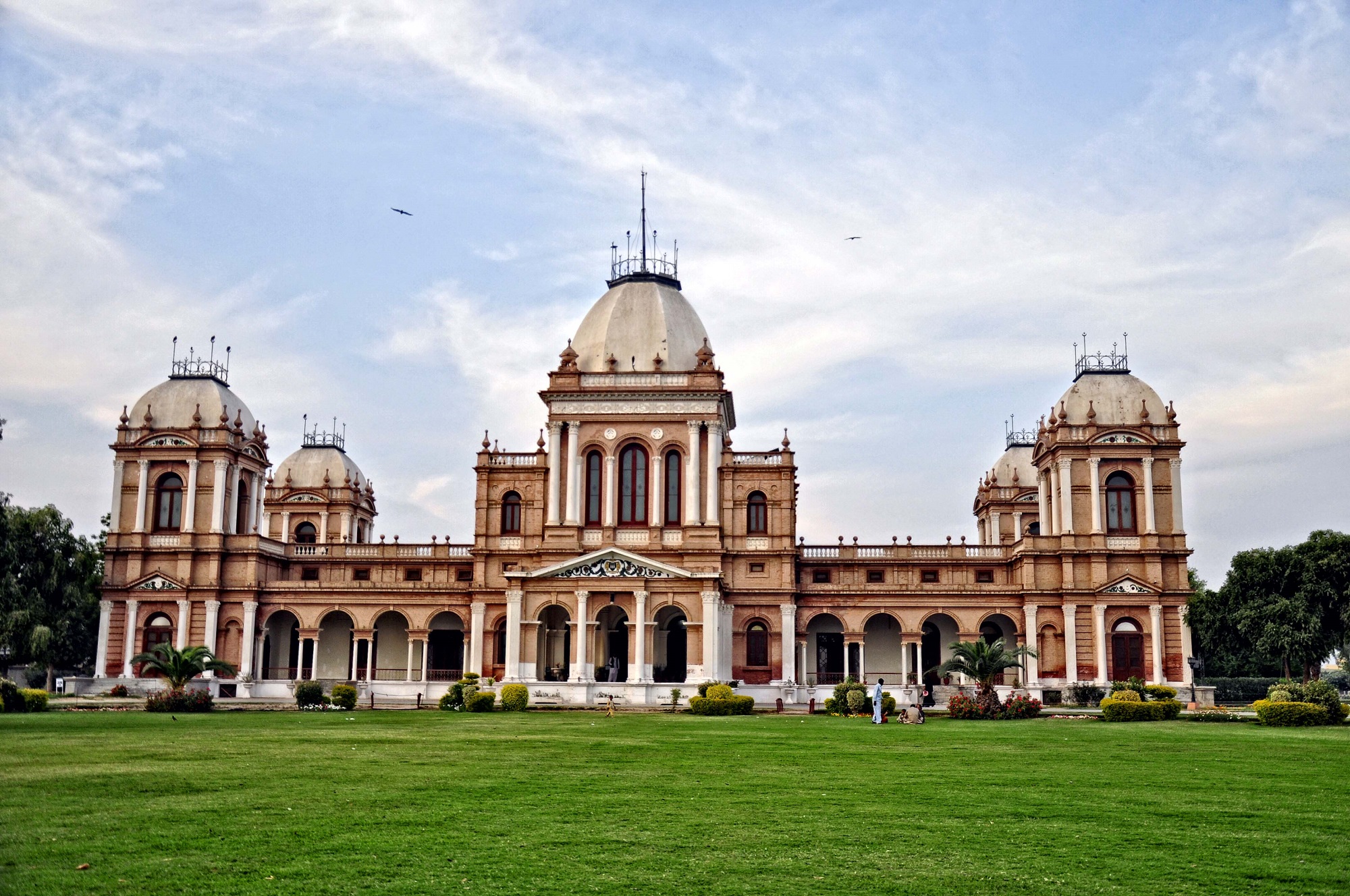 Standing proudly in the middle of a well-landscaped garden, the spectacular Noor Mahal is one of the most stunning reminders of the affluence of the Nawabs of Bahawalpur. Also known as the ‘Palace of Lights,’ Noor Mahal is one of the hidden gems of Bahawalpur constructed by Nawab Sadiq Muhammad Khan the fourth in 1872, who was also known as the Shah Jahan of Bahawalpur for his passion for constructing beautiful buildings. Standing proudly in the middle of a well-landscaped garden, the spectacular Noor Mahal is one of the most stunning reminders of the affluence of the Nawabs of Bahawalpur. Also known as the ‘Palace of Lights,’ Noor Mahal is one of the hidden gems of Bahawalpur constructed by Nawab Sadiq Muhammad Khan the fourth in 1872, who was also known as the Shah Jahan of Bahawalpur for his passion for constructing beautiful buildings.
This palatial building is an awe-inspiring Italian-style royal palace, with most of the place's materials and furniture were imported from England and Italy.
|
Gardens
|
Shalimar Gardens
|
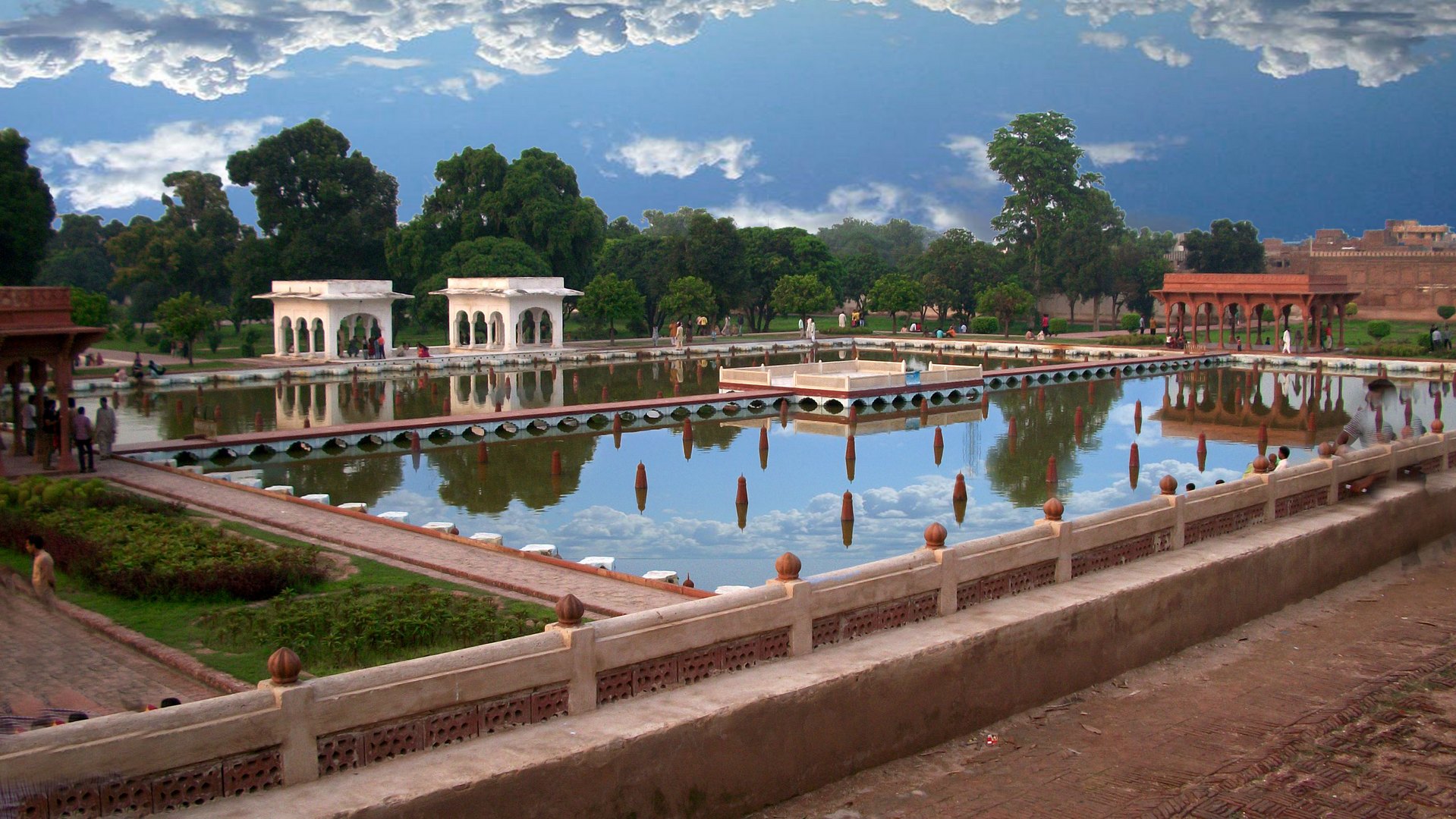 One of the only remaining gardens built during the Mughal reign in the once-imperial city of Lahore, Shalimar Gardens were added to the list of UNESCO World Heritage Sites in 1981 along with Lahore Fort. It was commissioned by Mughal Emperor Shah Jahan in the 17th century and is considered one of the top tourist attractions in Punjab. Terraced and walled gardens with pavilions and canals running through the centre were another innovation introduced for the very first time in the architectural history of the sub-continent, by Mughal Emperor Shahjahan. The beautiful garden, which is among the most popular picnic places in Lahore, is located nearly 5 km away from the Walled City of Lahore. One of the only remaining gardens built during the Mughal reign in the once-imperial city of Lahore, Shalimar Gardens were added to the list of UNESCO World Heritage Sites in 1981 along with Lahore Fort. It was commissioned by Mughal Emperor Shah Jahan in the 17th century and is considered one of the top tourist attractions in Punjab. Terraced and walled gardens with pavilions and canals running through the centre were another innovation introduced for the very first time in the architectural history of the sub-continent, by Mughal Emperor Shahjahan. The beautiful garden, which is among the most popular picnic places in Lahore, is located nearly 5 km away from the Walled City of Lahore. |
Bagh-e-Jinnah
|
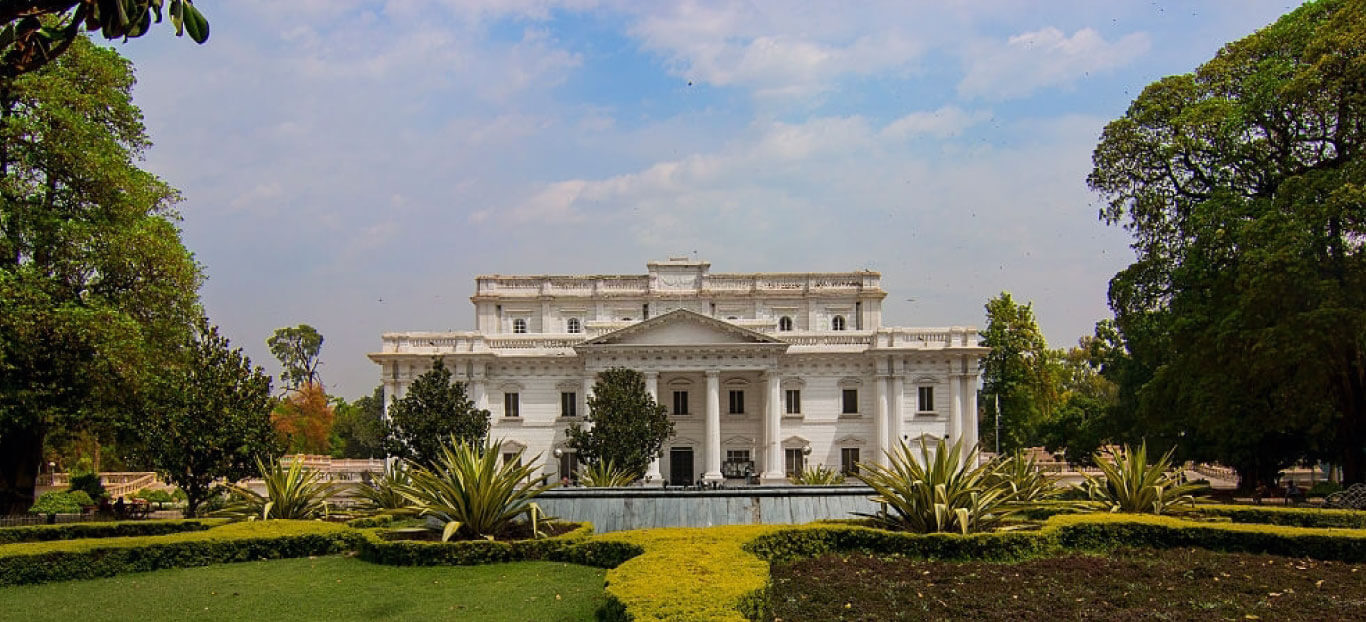 Bagh-e-Jinnah ground, previously known as the Lawrence Gardens, dates back to the days of the British rule. The garden was named after John Lawrence, 1st Baron Lawrence, who served as the first Chief Commissioner and then Lieutenant Governor of the Punjab, and who later became Viceroy of India from 1864 to 1869. The site was originally occupied by the Agri-Horticultural Society of the Punjab and had been planned as a botanical garden modelled on Kew Gardens in London. Having access from Lawrence Road and The Mall, the large green space contains a botanical garden, Masjid Dar-ul-Islam and Quaid-e-Azam Library. There are also entertainment and sports facilities within the park: an open-air theater, a restaurant, tennis courts and the Gymkhana Cricket Ground. Bagh-e-Jinnah ground, previously known as the Lawrence Gardens, dates back to the days of the British rule. The garden was named after John Lawrence, 1st Baron Lawrence, who served as the first Chief Commissioner and then Lieutenant Governor of the Punjab, and who later became Viceroy of India from 1864 to 1869. The site was originally occupied by the Agri-Horticultural Society of the Punjab and had been planned as a botanical garden modelled on Kew Gardens in London. Having access from Lawrence Road and The Mall, the large green space contains a botanical garden, Masjid Dar-ul-Islam and Quaid-e-Azam Library. There are also entertainment and sports facilities within the park: an open-air theater, a restaurant, tennis courts and the Gymkhana Cricket Ground. |
Kamran’s Garden
|
|
 Located amid River Ravi, Kamran’s Garden is the earliest Mughal garden in Lahore which was built in 1540 AD by Mirza Kamran, son of emperor Babur. Originally built across River Ravi at the outskirts of Lahore, the garden is now an island in River Ravi and is accessible by boats. Located amid River Ravi, Kamran’s Garden is the earliest Mughal garden in Lahore which was built in 1540 AD by Mirza Kamran, son of emperor Babur. Originally built across River Ravi at the outskirts of Lahore, the garden is now an island in River Ravi and is accessible by boats.
The garden was built by the Mughal Prince Mirza Kamran on the edge of the Ravi River. When the course of the river moved the garden became an island. A gateway survives and leads to the tomb of Emperor's Baradari - A baradari is a 12-doored pavilion.
|
Greater Iqbal Park
|
|
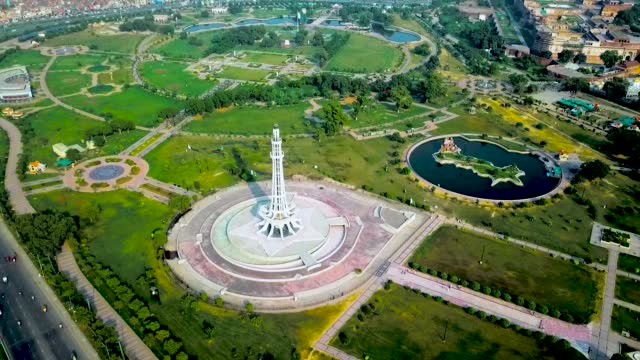 Home to the symbolic and historically significant Minar-e-Pakistan, Greater Iqbal Park is one of the iconic places for all Pakistanis. the 329-acre park includes an artificial lake which spreads over four acres which includes an 800-feet-long musical fountain. Other attractions include a two-km-long soft rail, a library, an open-air gym and a food court. Home to the symbolic and historically significant Minar-e-Pakistan, Greater Iqbal Park is one of the iconic places for all Pakistanis. the 329-acre park includes an artificial lake which spreads over four acres which includes an 800-feet-long musical fountain. Other attractions include a two-km-long soft rail, a library, an open-air gym and a food court.
Formerly known as Minto Park, this landmark commemorates the momentous occasion when the Pakistan Resolution was signed on March 23rd, 1940, during a session of All India Muslim League. This historic resolution led to the creation of Pakistan and is celebrated each year as ‘Pakistan Day.’
|
Masajid
|
Badshahi Masjid
|
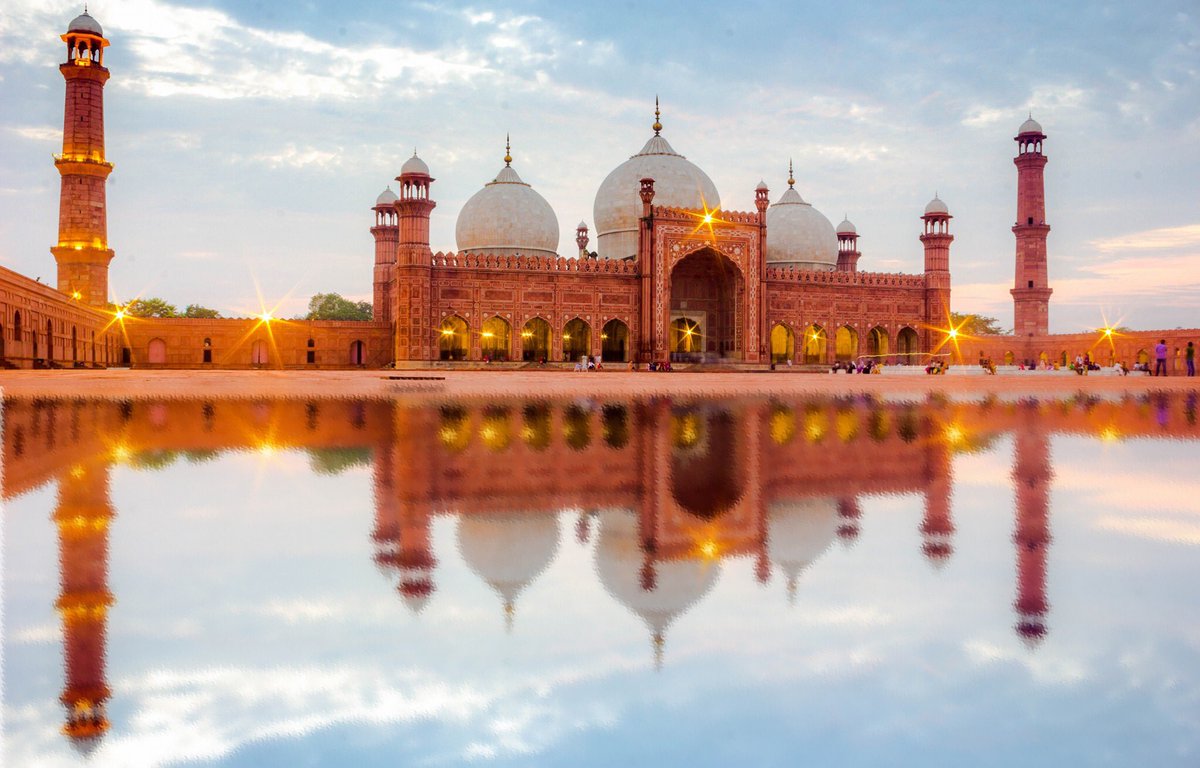 The majestic and stunning Badshahi Masjid is one of the top tourist attractions in Punjab for its architecture and splendor. Located in the Walled City of Lahore, it is one of the largest masjid of the country housing upto 1 lakh people within the premises. Connected to the magnificent Lahore Fort through its Alamgiri Gate, this iconic structure was built during the rule of Mughal Emperor Aurangzeb. It reminds the brilliance of the Mughal craft in the subcontinent. The beautiful embellishments on the walls and ceilings of the mosque, the intricate mosaic art, extravagant hand-painted murals as well as gorgeous stone and marble work illustrate the glory of the Mughal Empire. The majestic and stunning Badshahi Masjid is one of the top tourist attractions in Punjab for its architecture and splendor. Located in the Walled City of Lahore, it is one of the largest masjid of the country housing upto 1 lakh people within the premises. Connected to the magnificent Lahore Fort through its Alamgiri Gate, this iconic structure was built during the rule of Mughal Emperor Aurangzeb. It reminds the brilliance of the Mughal craft in the subcontinent. The beautiful embellishments on the walls and ceilings of the mosque, the intricate mosaic art, extravagant hand-painted murals as well as gorgeous stone and marble work illustrate the glory of the Mughal Empire. |
Masjid Wazir Khan
|
|
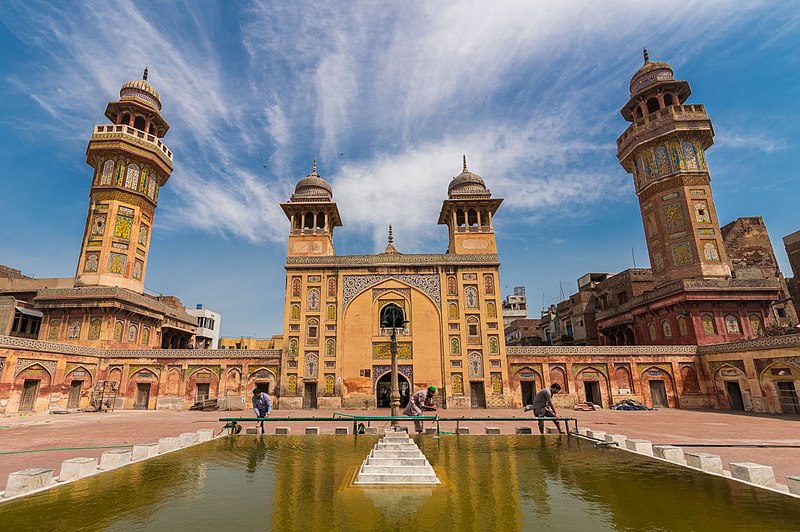 A true masterpiece of Mughal architecture, Masjid Wazir Khan Mosque is located in the Walled City of Lahore near to Delhi Gate. This masjid was brought to life by Hakim Ilm-ud-din Ansari, also known as Wazir Khan. It is a work of art - super detailed frescoes, elegant calligraphy, and intricate detailing. A true masterpiece of Mughal architecture, Masjid Wazir Khan Mosque is located in the Walled City of Lahore near to Delhi Gate. This masjid was brought to life by Hakim Ilm-ud-din Ansari, also known as Wazir Khan. It is a work of art - super detailed frescoes, elegant calligraphy, and intricate detailing.
The frescoes in the Wazir Khan Masjid are like pages from a history book, telling tales from the Islamic world. And when you look at the outside, it’s like this mesmerizing sight with blue tiles in Persian style – it’s like a fusion of influences that makes it even more amazing.
|
Sunehri Masjid
|
|
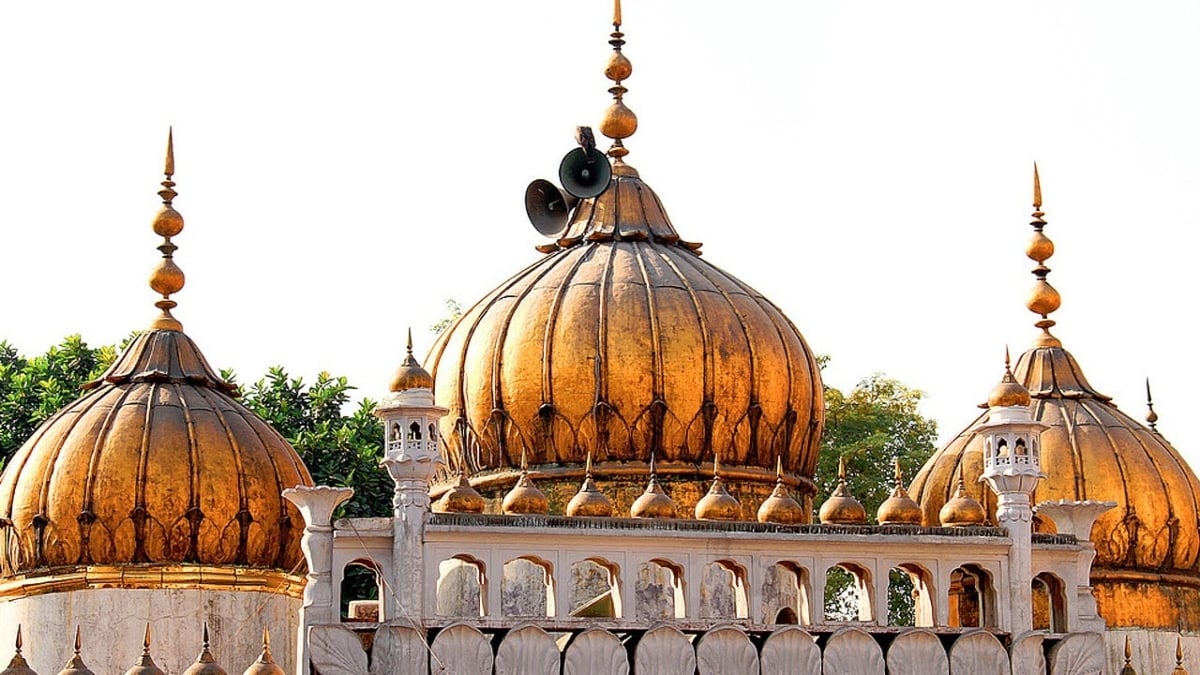 The Sunehri Masjid, also known as Talai Mosque, is one of the late Mughal architecture in the walled city Lahore in Kashmiri Bazaar, in the reign of Muhammad Shah. In accordance with its name, it is celebrated for its stunning gold leaf and marble work. The Sunehri Masjid, also known as Talai Mosque, is one of the late Mughal architecture in the walled city Lahore in Kashmiri Bazaar, in the reign of Muhammad Shah. In accordance with its name, it is celebrated for its stunning gold leaf and marble work.
The mosque’s glittering exterior is a testament to the opulence of the Mughal era. The beautiful Sunehri Mosque showcases its golden façade in the most enchanting way during the magical sunrise and sunset moments. It’s truly a sight that captivates and amazes everyone.
|
Abbasi Masjid
|
|
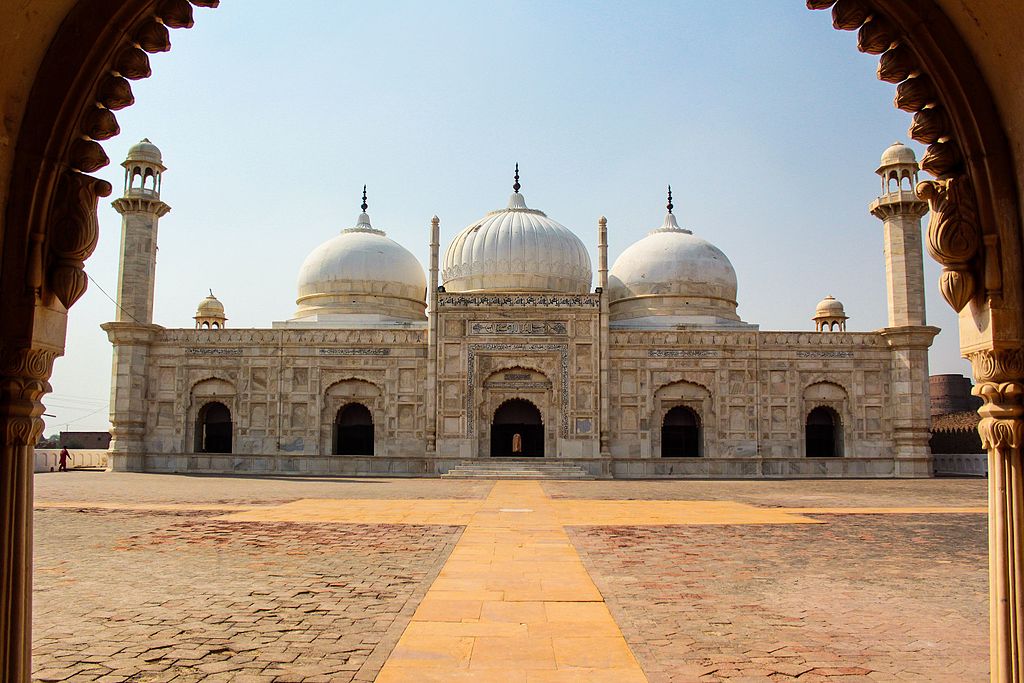 The Abbasi Masjid is located within the Derawar Fort complex. It has three domes in the main building, one at the main entrance, and four minarets, and was built in 1844 CE. The Abbasi Masjid is located within the Derawar Fort complex. It has three domes in the main building, one at the main entrance, and four minarets, and was built in 1844 CE.
However, built as a duplicate of the Moti Masjid at Lahore Fort, it is well furnished.
The masjid is still well preserved and maintained in excellent condition by the locals. The masjid is made of beautiful marble and is full of decorative calligraphy work and its aesthetics boast modest charm.
|
Tombs
|
Iqbal’s Tomb
|
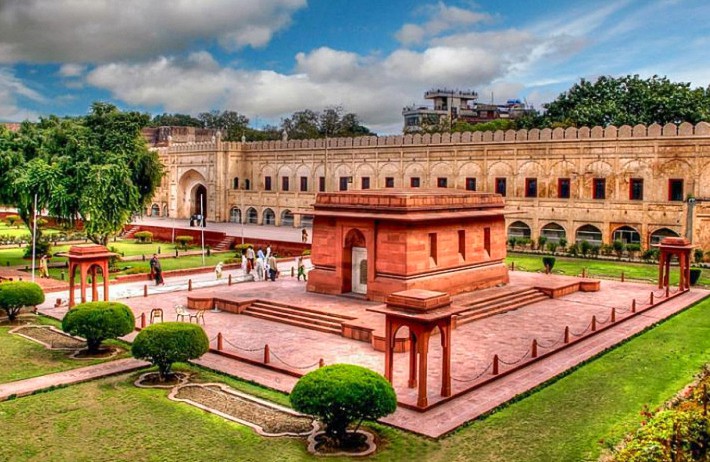 The mausoleum of Allama Muhammad Iqbal (1877–1938), poet and philosopher known for his influential efforts to direct his fellow Muslims in British-administered Sub-continent, is in Lahore where thousands of people arrive to pay their respects to the poet-philosopher. The tomb architecture has a blend of styles reflects mostly in the Mughal style. The structure is completely built of red Sandstone, which was brought from Jaipur, India, and building marble from, Rajputana. The mausoleum was designed by chief architect, Nawab Zain Yar Jang Bahadur. The tombstone was a gift from the people of Afghanistan, made of lapis lazuli and with the inscription of Quranic verses in calligraphy inscribed in Afghanistan. The mausoleum of Allama Muhammad Iqbal (1877–1938), poet and philosopher known for his influential efforts to direct his fellow Muslims in British-administered Sub-continent, is in Lahore where thousands of people arrive to pay their respects to the poet-philosopher. The tomb architecture has a blend of styles reflects mostly in the Mughal style. The structure is completely built of red Sandstone, which was brought from Jaipur, India, and building marble from, Rajputana. The mausoleum was designed by chief architect, Nawab Zain Yar Jang Bahadur. The tombstone was a gift from the people of Afghanistan, made of lapis lazuli and with the inscription of Quranic verses in calligraphy inscribed in Afghanistan. |
Jahangir’s Tomb
|
|
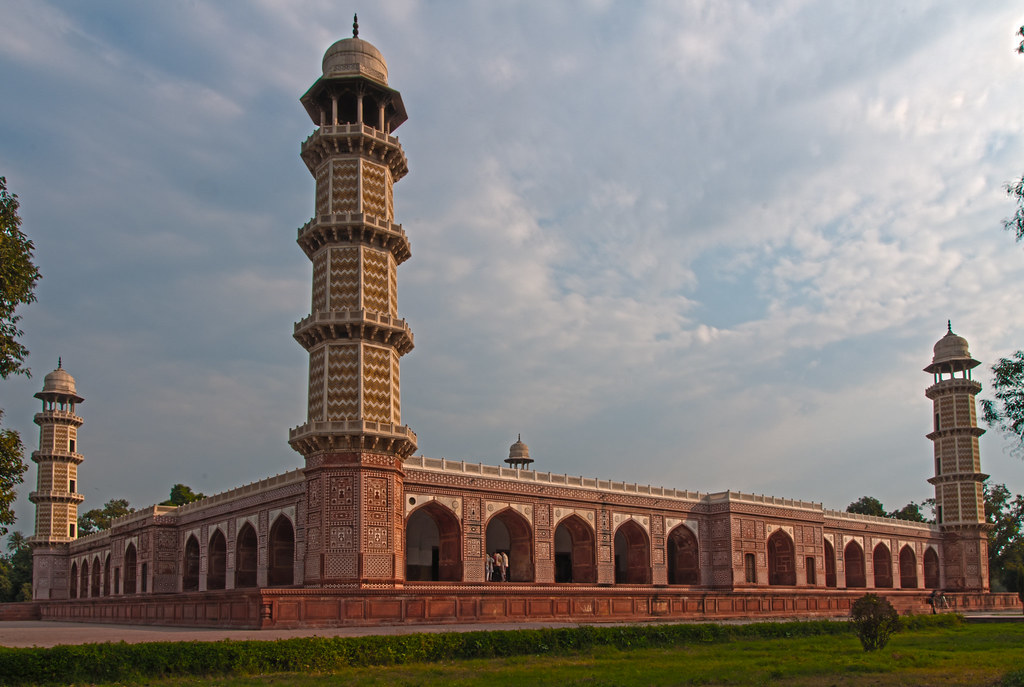 The tomb of 4th Mughal Emperor, Noor-ud-Din Muhammad Jahangir (1569-1627 A.D) built in the middle of an enormous garden on the right bank of River Ravi at Shahdara town on the north- western outskirts of Lahore. The tomb of 4th Mughal Emperor, Noor-ud-Din Muhammad Jahangir (1569-1627 A.D) built in the middle of an enormous garden on the right bank of River Ravi at Shahdara town on the north- western outskirts of Lahore.
The tomb and its garden are enclosed by a high brick wall with an imposing gateway on the western side linking the Akbari Sarai. The tomb garden is divided into four main parterres and further sub divided into sixteen equal squares by brick paved walkways with water channels. Each intersection is marked by an alternate octagonal and square cistern.
|
Anarkali’s Tomb
|
|
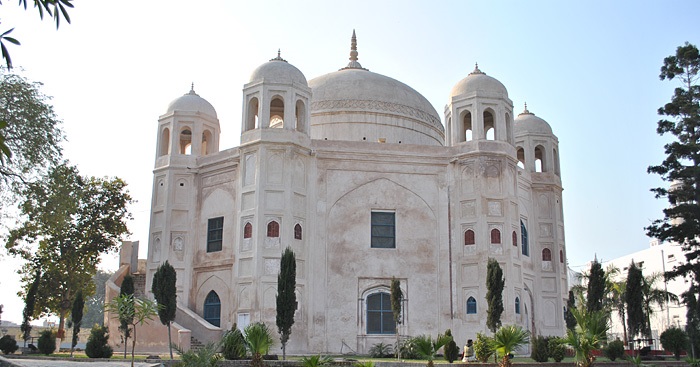 Named after the famous and legendary character of Anarkali, this tomb is located in the Civil Secretariat premises of Lahore. It is considered to be one of the earliest Mughal tombs still in existence, and is considered to be one of the most significant buildings of the early Mughal period. Named after the famous and legendary character of Anarkali, this tomb is located in the Civil Secretariat premises of Lahore. It is considered to be one of the earliest Mughal tombs still in existence, and is considered to be one of the most significant buildings of the early Mughal period.
The tomb was built by the Mughal Emperor Jehangir for his love Anarkali. It was used as first Christian Church in the British era after their arrival in the region. The octagonal tomb now houses an archives gallery of Punjab province.
|
Bibi Jawindi’s Tomb (Uch Sharif)
|
|
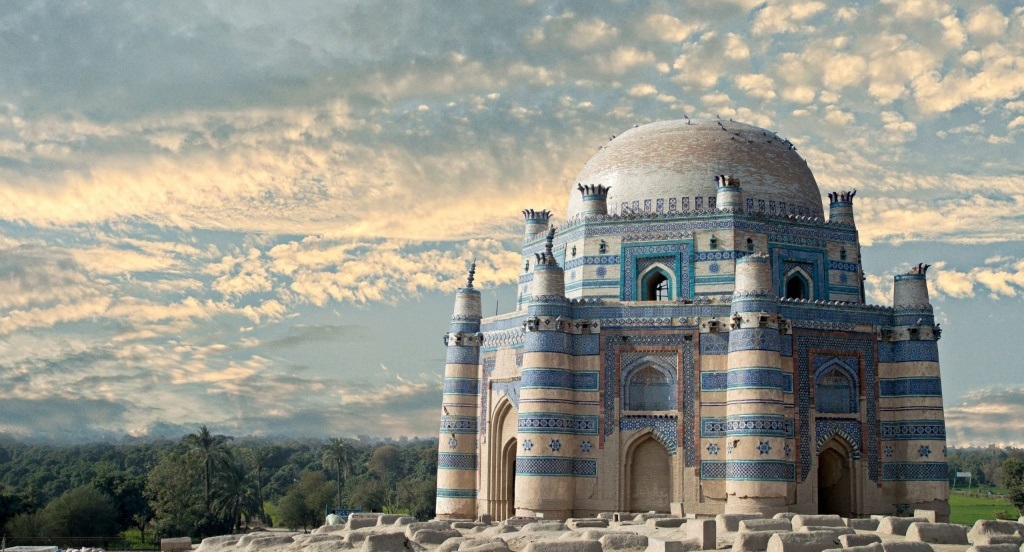 The Tomb of Bibi Jawindi is one of the five monuments in Uch Sharif, Punjab, that are on the tentative list of the UNESCO World Heritage Sites. The site is located in Uch Sharif, a historical city founded by Alexander the Great, in the Bahawalpur which is known as the home of the “shrine culture” due to presence of several monuments and shrines. The Tomb of Bibi Jawindi is one of the five monuments in Uch Sharif, Punjab, that are on the tentative list of the UNESCO World Heritage Sites. The site is located in Uch Sharif, a historical city founded by Alexander the Great, in the Bahawalpur which is known as the home of the “shrine culture” due to presence of several monuments and shrines.
Both the interior and exterior of this 15th century building is richly decorated with Islamic scriptures, carved timber, and bright blue and white mosaic tiles known as faience.
|

